
Best Toys for Bored Indoor Cats (Including Ones That Move on Their Own)
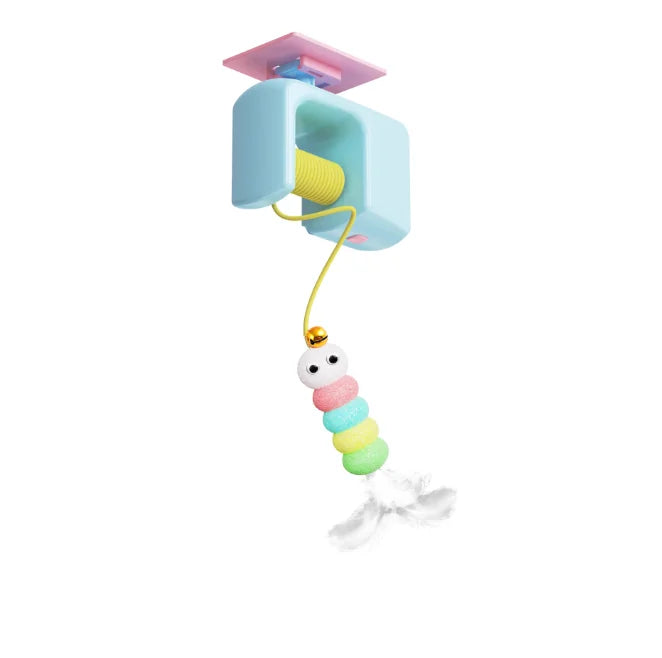
The best toys for bored indoor cats let your cat do what it would do outside: stalk, chase, pounce, grab and bite. Most cats need a mix. A wand toy for daily play with you, a few small toys to bat and kick, and at least one toy that moves on its own for the hours you're busy or away. Match the toys to how your cat likes to play, and swap them around so they don't go stale.
This guide groups toys by play style, explains what self-moving toys can and can't do, and gives you a simple routine and rotation plan.
Signs your indoor cat is bored
Boredom doesn't always look like lying around. Watch for:
- Scratching furniture, curtains or doors more than usual
- Knocking things off shelves or tables, especially while looking at you
- Night-time zoomies or racing around at dawn
- Ambushing ankles and feet
- Meowing loudly or following you from room to room
- Over-grooming, or sleeping far more than usual
- Ignoring toys that have been lying in the same spot for weeks
If your cat suddenly changes behavior, stops eating, or grooms until skin shows, see a vet first. Some of these signs can also point to health problems, not just boredom.
What to look for in toys for bored indoor cats
- Movement that looks like prey. Fluttering, darting, wriggling and stopping. Cats lose interest in things that move in a steady, predictable way.
- The right size. Small enough to grab and carry, big enough not to be swallowed.
- Safe materials. No loose small parts, no easily chewed-off bits. Check feathers and strings regularly.
- A mix of interactive and solo toys. Interactive cat toys build your bond and burn the most energy. Solo toys fill the gaps.
- Easy to put away. Toys you can store between sessions stay exciting for longer.
Toys grouped by play style
Spend a few days watching how your cat plays. Most cats lean toward one or two of these styles.
Chasers
Cats that sprint after anything rolling or darting. Light balls you can toss down a hallway are ideal. They bounce unpredictably, are quiet on hard floors, and work for solo play too because a swat sends them off again. Light-dot games are popular with chasers, but always end on something your cat can actually catch (more on that below).
Pouncers and wrestlers
These cats crouch, wiggle their back end, and land on their target. Then they grab it, hug it and bunny-kick it. They love kicker toys and catnip sticks they can wrap their legs around, and toys that react when touched, like a fish that flops when swatted.
Solo players
Independent cats that play when they feel like it, often at night or when you're out. Give them toys that keep things interesting without you: self-moving toys, springy teasers that sway after every swat, and a few small toys left in different spots.
Wand-play hunters
Cats that come alive when you're on the other end of the toy. A wand lets you control the prey: hide it behind a chair, drag it slowly, flick it into the air. For most indoor cats, wand play is the single best way to tire them out properly.
Cat toys that move on their own: what to expect
Cat toys that move on their own are a real help for busy households, but they work best as part of a mix, not a replacement for you.
- Motorized feather toys spin or swing feathers in a bird-like pattern. Great for jumpers and grabbers.
- Flopping fish toys start wriggling when touched. Good for wrestlers who like to kick and bite.
- Spring-pole teasers aren't electric, but they sway and bounce after every hit, so they keep moving for a while.
Tips: introduce the toy while you're home so you can see how your cat reacts. Some cats are wary of moving toys at first. Check batteries or charge regularly, and inspect feathers and strings for wear. Don't leave toys with strings out if your cat tends to chew and swallow them.
How to entertain an indoor cat: a step-by-step play routine
- Pick a time. Dusk and early morning are natural hunting times for many cats. An evening session can also help with night-time zoomies.
- Start slow. Move the wand toy away from your cat, along the floor, behind furniture. Prey runs away; it never charges the cat.
- Build up. Add quick darts, pauses and short flights into the air.
- Let them catch it. Several times. Winning matters for satisfaction.
- Wind down. Slow the toy as if the prey is tired, then let your cat make a final catch.
- Finish with food or a treat. Hunt, catch, eat. This rhythm helps many cats settle afterwards.
- Put the wand away. Leave a solo toy out instead.
Two or three short sessions a day usually work better than one long one. Older cats may want gentler, shorter play; young cats may want more.
How to rotate toys so they stay interesting
A toy that's always on the floor quickly becomes furniture. Rotation keeps things new without buying more.
- Split your toys into three or four groups, each with a mix of styles.
- Leave one group out and store the rest in a closed box or drawer.
- Swap groups every few days or once a week.
- Store catnip toys in a sealed container so the scent stays stronger.
- Keep wand toys out of reach between sessions; they're for play with you.
- Move solo toys to new spots: near a window, on a cat tree, at the end of a hallway.
Common mistakes
- Laser-only play. A light dot can never be caught. End every laser session by landing it on a toy your cat can grab.
- Moving the toy toward the cat. It feels like a threat, not prey.
- Leaving string and wand toys out unsupervised. Strings can be swallowed.
- Expecting a self-moving toy to do everything. It fills gaps; it doesn't replace daily play with you.
- Giving up too fast. Some cats need a few tries before they warm up to a new toy.
- Too many toys out at once. Fewer, rotated toys usually get more attention.
Quick checklist by play style
- Chaser: soft balls, a laser that ends on a real toy
- Pouncer/wrestler: catnip sticks, kicker toys, a flopping fish
- Solo player: motorized feather toy, spring-pole teaser, scattered small toys
- Wand hunter: ribbon or feather wand, daily sessions with you
- Every cat: a rotation box and a short play routine
Where to start in our store
Browse our full range of Cat Toys, or see the Toys for Dogs & Cats Left Home Alone collection if your cat spends long hours by itself. A few picks that fit the styles above:
- Electric Swinging Feather Cat Toy: a rotating arm moves feathers like a bird, for solo players and jumpers.
- Electric Flopping Fish Cat Toy, USB Rechargeable: starts flopping when swatted, ideal for kickers and biters.
- Suction Cup Feather & Bell Cat Teaser: sticks to a floor, window or wall and sways with every swat.
- Rainbow Cat Teaser Wand: fluttering ribbons for daily interactive play.
- Rainbow Soft Play Balls – Value Pack: light, quiet balls for chasers, with spares for the ones lost under the couch.
- Catnip Chew Sticks: big enough to hug and bunny-kick.
Questions about which toy suits your cat? Write to us at support@petify-online.com.
FAQ
How many toys does an indoor cat need?
There's no fixed number. A small set covering each play style, rotated every few days, usually works better than a large pile left out all the time.
Are cat toys that move on their own enough?
They help a lot when you're busy or away, but most cats still need daily interactive play with you to burn energy and stay engaged.
How long should I play with my cat each day?
Many cats do well with two or three short sessions a day. Watch your cat: heavy panting or losing interest means it's time to wind down.
Why doesn't my cat react to catnip?
Not every cat responds to catnip, and young kittens often show little reaction. Those cats may still enjoy the same toys for kicking and chewing.
Are laser pointers bad for cats?
They're fine in moderation, as long as you never shine the light in your cat's eyes and you end each session on a toy it can catch.
Can I leave wand toys out when I'm not home?
It's safer not to. Strings and ribbons can be chewed and swallowed. Leave solo toys without long strings instead.
Buy 2 products, save 15% · 3 or more, save 25%
Shop the deals