
How to Keep Your Dog Busy While Home Alone: 10 Toys & Enrichment Ideas
If you're wondering how to keep your dog busy while at work, the short answer is to stack a few simple things. Start with a proper walk before you leave. Then give a food-based activity that takes time, like a snuffle mat, lick mat or stuffed chew toy, along with one or two safe toys you rotate through the week. For long days, add a midday break. No single toy will entertain a dog for eight hours. A good routine makes the hours alone calmer and much less boring.
This guide is for working owners. It covers what to look for in dog toys for boredom, 10 practical enrichment ideas, a step-by-step routine, toy rotation, and the safety mistakes worth avoiding.
What Actually Keeps a Dog Busy (and What to Look For)
Dogs settle best after they've used their nose, their mouth and their brain. Toys for dogs left alone work when they tap into these natural behaviours:
- Sniffing: searching for food is tiring in a good way, which is the main reason snuffle mats and treat-hiding toys work so well.
- Licking and chewing: these are repetitive, self-soothing activities that help many dogs relax.
- Problem solving: puzzles and slow feeders make a dog work out how to get the reward.
When choosing dog toys to keep them busy, look for these features:
- The right size for your dog's mouth. Nothing small enough to swallow.
- Materials that match how your dog plays. Gentle mouthers can have plush toys. Power chewers need tough rubber.
- Easy cleaning, especially for anything that holds food.
- No loose strings, small detachable parts or batteries within reach.
How to Keep Your Dog Busy While at Work: 10 Ideas
1. A sniff-heavy walk before you leave
A 20–30 minute walk where your dog is allowed to sniff often does more than a fast march. A dog that has explored and toileted is far more likely to nap once you're gone.
2. Breakfast on a snuffle mat
Snuffle mat benefits are simple. Scattering dry food or treats into the fabric turns a 30-second meal into several minutes of focused nose work. Most dogs finish, have a drink and lie down. It also slows down fast eaters.
3. A frozen lick mat
Spread a dog-safe food such as plain yogurt, mashed pumpkin or wet dog food on a lick mat and freeze it overnight. Freezing makes the activity last much longer. Many dogs find steady licking calming in the first stretch after you leave, which is often the hardest part for them.
4. A stuffed and frozen rubber chew toy
A hollow, durable rubber toy filled with part of the daily food and frozen is a classic for good reason. Start with an easy, loose filling, then pack it tighter as your dog gets better at it.
5. A puzzle feeder or slow feeder bowl
Puzzle feeders and slow feeder bowls make your dog work for each mouthful. Choose a level your dog can solve without getting frustrated. Leave the multi-step puzzles for when you're home to help.
6. Treat-hiding plush toys
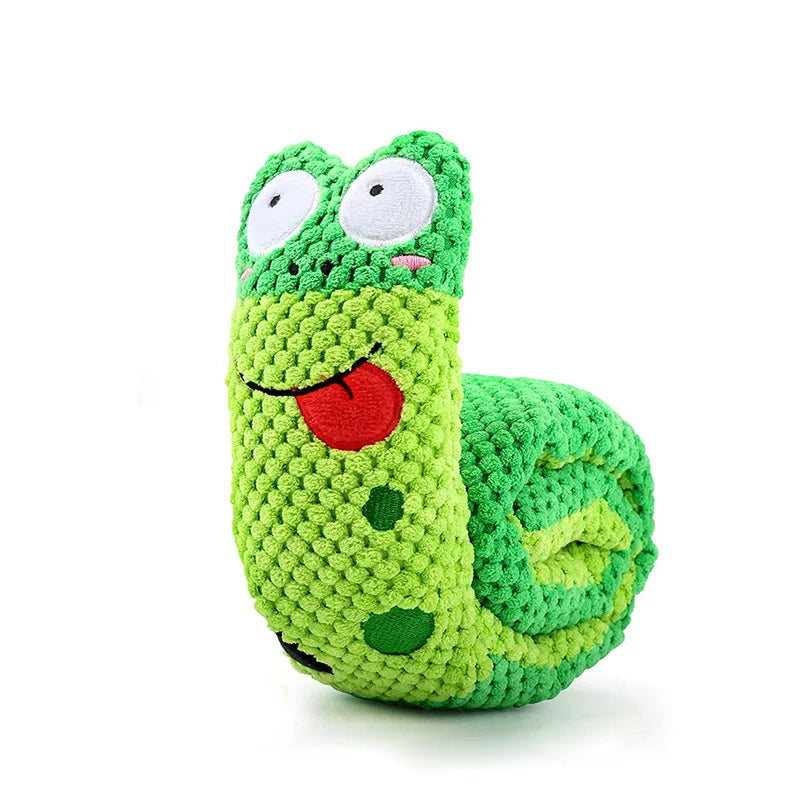
Plush toys with pockets, like a snuffle snail or a pea pod with squeaky peas, combine sniffing, pulling and a little squeaking. They're excellent for gentle players. If your dog tends to rip fabric apart, offer these only when you're around.
7. A durable, size-appropriate chew
Leave one sturdy chew toy your dog has already proven they won't destroy. Avoid anything hard enough to crack teeth and anything that splinters.
8. A treasure hunt
Before leaving, hide a few small treats around one room, behind a chair leg, under a mat or on a low shelf. Begin with easy spots while your dog watches, then make it harder over time. Keep it to a safe, dog-proofed area.
9. A comfort spot and a familiar toy
A cosy bed in a quiet corner, an item that smells like you and a favourite soft toy help many dogs settle. Some owners also leave low background sound on. See what works for your dog.
10. A midday break
For full workdays, a dog walker, a friend, a lunchtime visit or a daycare day once or twice a week breaks up the hours. Toys help a lot, but they don't replace company and a toilet break.
Quick Checklist: Which Activity Fits Your Dog?
- Fast eater or food-motivated: snuffle mat, slow feeder, puzzle feeder.
- Anxious in the first minutes alone: frozen lick mat or stuffed rubber toy given as you leave.
- Gentle player who loves squeakers: treat-hiding plush toys, a soft squeaky toy.
- Power chewer: durable rubber toys only. No plush unsupervised.
- Young, high-energy dog: a longer morning walk and a midday break, plus a food activity.
- Senior dog: easy snuffle and lick activities and a comfortable bed.
Step by Step: Building a Home-Alone Routine
- Exercise first. Walk, sniff, toilet.
- Calm down. Give 10 minutes of quiet at home so your dog isn't wound up when you leave.
- Set up the area. Put out water, the bed and one or two safe toys. Remove anything dangerous.
- Hand over the activity as you leave. A lick mat or stuffed toy creates a positive link with your departure.
- Keep goodbyes low-key. A calm exit, with no big emotional farewell.
- Tidy up on your return. Pick up food toys, check for damage and wash what needs washing.
How to Rotate Toys So They Stay Interesting
A toy that's always on the floor quickly becomes background. Rotation keeps the same collection feeling new:
- Split toys into 3–4 groups and swap the group every few days.
- Keep the "special" toys, like treat-hiding plush and food puzzles, for alone time only, so they stay exciting.
- Change the food activity daily: snuffle mat Monday, lick mat Tuesday, stuffed toy Wednesday and so on.
- Inspect toys as you rotate them and retire anything torn or cracked.
Safety Tips and Common Mistakes
- Leaving untested toys. Watch your dog with any new toy a few times before leaving them alone with it.
- Plush with a shredder. Squeakers and stuffing can be swallowed. Plush toys are for supervised play if your dog destroys them.
- Too many toys at once. Two or three good options work better than a pile.
- Forgetting the daily food total. Food used in toys and mats should come out of the daily ration, not on top of it.
- Puzzles that are too hard. Frustration can lead to chewing the puzzle itself.
- Expecting toys to fix separation anxiety. If your dog howls, destroys doors or soils the house every time you leave, talk to your vet or a qualified behaviourist. Toys support a training plan. They don't replace one.
Where to Find These in Our Store
Our Toys for Dogs & Cats Left Home Alone collection brings together toys picked for solo time. For puzzle bowls and slow eating, browse Slow Feeding for Dogs & Cats. The full range is in Dog Toys.
A few products that fit the ideas above:
- Snail Snuffle Plush Treat Toy: hide treats in the pockets, roll it up and let your dog sniff and unroll it. This is a great nose-work toy for gentle players.
- Pea Pod Plush Hide-and-Seek Toy: three squeaky peas tucked into a pod for your dog to pull out one by one.
- Squeaky Plush Octopus Dog Toy: arms with squeakers and crinkle, suited to small and medium dogs who play softly.
- Squeaky Cigar Plush Dog Toy: a light, squeaky plush that's easy to carry. It's a fun addition to your rotation.
Questions about which toy suits your dog? Email us at support@petify-online.com. Orders come with free international shipping with tracking and 14-day returns from delivery.
FAQ
How long can a dog be left alone with toys?
It depends on age, health and toilet needs. Toys can make the time easier, but adult dogs still need regular toilet breaks and company. For full workdays, a midday break is strongly recommended. Puppies need much shorter stretches.
What are the main snuffle mat benefits?
A snuffle mat slows eating, gives your dog focused nose work and tends to leave them calm and ready to rest. That makes it a good way to serve breakfast before you leave.
Are plush toys safe to leave with a dog?
Only for dogs who play gently and don't rip toys apart. If your dog shreds fabric or chews off squeakers, keep plush for supervised play and leave tough rubber toys instead.
How many toys should I leave out?
Usually two or three: one food activity, one chew and one comfort toy. Rotate the rest so they stay interesting.
What are the best dog toys for boredom?
Toys that involve food and the nose usually hold attention longest. Think snuffle mats, lick mats, stuffed rubber toys, puzzle feeders and treat-hiding plush toys for gentle players.
My dog ignores the toys when I'm gone. Why?
Some dogs won't eat or play until they relax. Practise short absences, give the activity as you leave and make sure your dog is well exercised first. If your dog seems stressed, ask your vet or a behaviourist.
Buy 2 products, save 15% · 3 or more, save 25%
Shop the deals