
How to Choose a No-Pull Harness: Front Clip vs Back Clip, Sizing & Fit
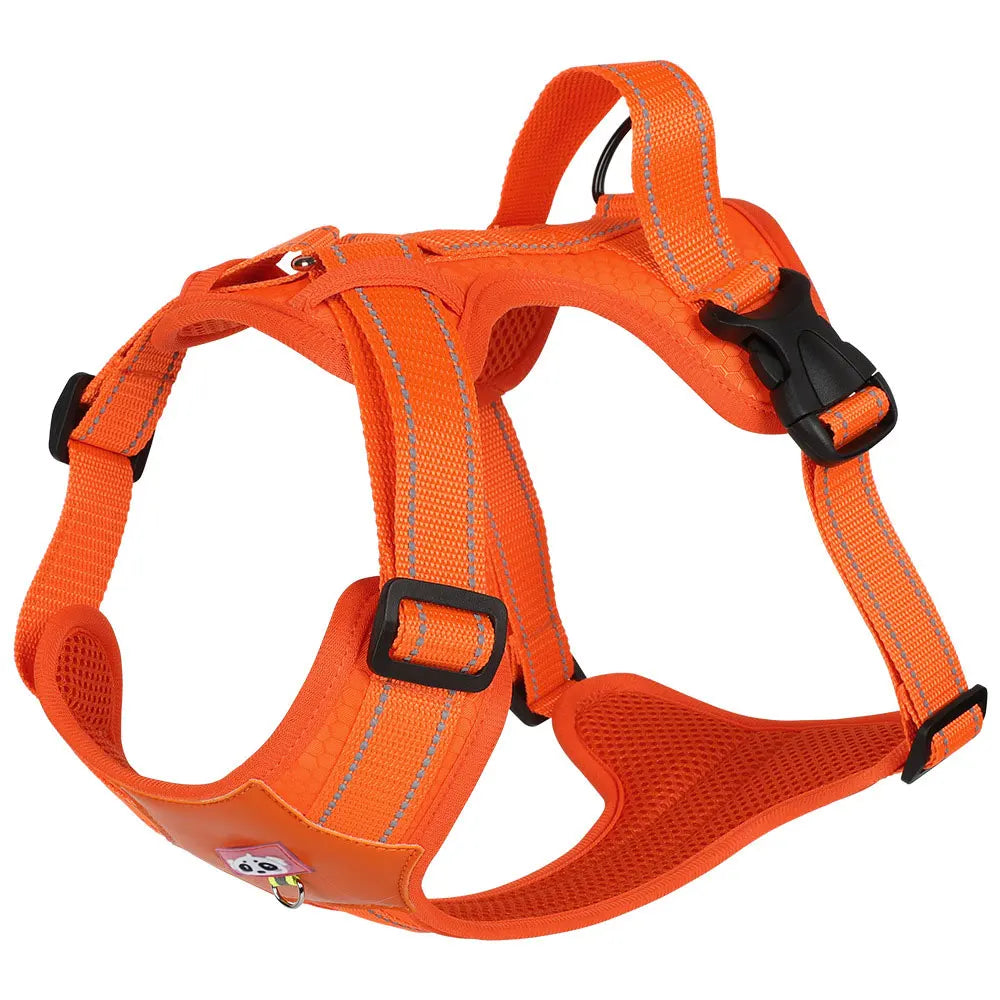
If you're wondering how to choose a no-pull harness for a medium or large dog, the short answer is this: pick the clip position that matches how hard your dog pulls (front clip for strong pullers, back clip for calmer walkers, both if you're unsure), measure the chest girth properly, and choose a design that leaves the shoulders free and spreads pressure across the chest. Fit matters more than any feature. A well-chosen harness that's badly adjusted will rub, slip or let your dog back out of it.
This guide focuses on bigger dogs, from spaniels and border collies up to retrievers, shepherds and Dobermans, where pulling force is real and a poor fit shows quickly.
Do No-Pull Harnesses Work?
Yes, but it helps to know what they actually do. A no-pull harness doesn't train your dog for you. It changes the mechanics of pulling, so leaning into the leash becomes less effective and less rewarding, and it moves pressure away from the throat and onto the chest. That gives you more control and makes walks safer for your dog's neck.
For lasting results, combine the harness with simple loose-leash training: stop when the leash goes tight, move forward when it slackens, and reward your dog for walking beside you. The harness makes those sessions easier to manage, especially with a strong dog.
Front Clip vs Back Clip Dog Harness
The leash attachment point is the single biggest factor in how a harness handles pulling.
Front clip (chest ring)
- How it works: when your dog pulls, the leash turns them gently sideways, back toward you, instead of letting them power forward.
- Best for: strong or excitable pullers, reactive dogs that lunge, and owners who need extra control.
- Watch out for: the leash can drape between the front legs and tangle. A standard length leash (not a retractable one) works best.
Back clip (ring between the shoulder blades)
- How it works: the leash attaches on top of the back, so the pressure is spread across the chest without redirecting the dog.
- Best for: dogs that already walk fairly calmly, hiking, and dogs that find a front clip awkward.
- Watch out for: many dogs naturally lean into pressure on their back, so a back clip alone usually does little to reduce pulling.
Dual clip
Some harnesses have both rings. That's a flexible choice for a large dog in training: use the front ring on busy streets and the back ring for relaxed walks or once your dog's leash manners improve. A handle on the back is another useful extra for big dogs, giving you a quick grip at crossings or when another dog passes.
How to Choose a No-Pull Harness for Medium and Large Dogs
Use this checklist when comparing options:
- Clip position: front, back or both, based on how your dog pulls.
- Shoulder freedom: a Y-shaped front, where the straps sit on the breastbone and pass beside the shoulders, lets a big dog move naturally. Avoid a strap that runs straight across the front of the shoulder joints.
- Wide, padded chest panel: spreads the load of a strong dog over a larger area and reduces rubbing.
- Adjustment points: look for at least two (neck and chest), ideally more, so you can fine-tune the fit for a deep or barrel-shaped chest.
- Buckles and hardware: sturdy quick-release buckles and solid metal leash rings matter more as dog size goes up.
- Handle: very useful for strong dogs, for holding them close or helping them over obstacles.
- Visibility and weather: reflective trim for early-morning and evening walks; a water-resistant outer layer if you walk in rain or mud.
- Breathability: mesh lining helps thick-coated or active dogs in warm weather.
How to Measure a Dog for a Harness: Step by Step
Guessing by breed or weight alone is the most common reason a harness doesn't fit. Take five minutes and measure.
- Get a soft tape measure. If you only have a ruler, use a piece of string and measure the string afterwards.
- Stand your dog on all four legs. Measuring while your dog sits or lies down gives inaccurate numbers.
- Measure the chest girth. Wrap the tape around the widest part of the rib cage, just behind the front legs. This is the most important measurement.
- Measure the neck. Wrap the tape around the base of the neck, lower than where a collar normally sits, where the neck meets the shoulders.
- Keep the tape snug, not tight. You should be able to slide two fingers under it.
- Write down both numbers and the weight. Compare all three against the size chart on the product page.
- If you're between sizes, choose the size where your dog's chest falls closer to the middle of the range. For fluffy dogs or young dogs still filling out, the larger size with straps tightened is usually the safer bet.
Harness Sizes for Dogs: A General Guide
Sizes differ between models, so always check the specific chart on the product page. As a rough starting point, chest girth usually maps like this:
| Size | Typical chest girth | Example dogs |
|---|---|---|
| S | 40–55 cm (16–22 in) | Small terriers, young puppies of medium breeds |
| M | 55–70 cm (22–28 in) | Beagles, cocker spaniels, smaller border collies |
| L | 65–85 cm (26–33 in) | Border collies, labradors, boxers |
| XL | 80–100 cm (31–39 in) | Golden retrievers, German shepherds, Dobermans |
Ranges overlap on purpose. Two dogs of the same breed can need different sizes, which is exactly why measuring beats guessing.
Common Fit Mistakes (and How to Fix Them)
- Too loose: if you can fit your whole hand under a strap, your dog may be able to reverse out. Tighten until two fingers fit snugly.
- Too tight: red skin, hair loss or rubbing in the armpits means the chest strap is too tight or sits too close to the front legs.
- Chest strap in the wrong place: it should sit about a hand's width behind the front legs, not right in the armpit.
- Restricting the shoulders: watch your dog walk. A shortened stride or awkward gait suggests a strap is pressing on the shoulder joints.
- Front ring drifting sideways: if the front clip slides toward one shoulder, the neck strap is too loose.
- Not rechecking: adjust again after grooming, coat changes, weight changes or a growth spurt.
- Leaving it on all day: take the harness off at home to let the skin and coat breathe and to prevent rubbing.
No-Pull Harnesses and Leashes at PETIFY
Browse our No-Pull Harnesses for Dogs collection, or see the wider range of Harnesses, Collars & Leashes. A few options that suit medium and large dogs:
- Waterproof Reflective Vest Harness for Large Dogs: a wide vest that spreads pressure across the chest, with waterproof fabric, reflective trim and quick-release buckles for big dogs that pull hard.
- Padded No-Pull Harness with Handle – 9 Colors: soft padding on chest and back, a control handle and sizes from S to XL.
- Padded No-Pull Reflective Dog Harness: padding that doesn't rub or pinch, keeps pressure off the neck and adds reflective strips for evening walks.
- No-Pull Vest Harness & Leash Set – 6 Colors: a padded vest with reflective strips and a matching leash.
- Cow Print No-Pull Vest Harness: for small and medium dogs, with breathable mesh, a back handle and an escape-resistant design.
- Short Traffic Control Dog Leash with Padded Handle: pairs well with any harness when you need your dog right beside you at crossings or in crowds.
Check each product page for its size chart and clip details before ordering. Unsure about size? Email your dog's measurements to support@petify-online.com and we'll help you pick. Orders come with free international shipping with tracking and 14-day returns from delivery.
FAQ
Is a front clip or back clip harness better for a dog that pulls?
For a dog that pulls, a front clip is usually more effective because it redirects your dog sideways when they lean forward. A back clip is more comfortable for calm walkers but does little to stop pulling.
How do I measure my dog for a harness?
With your dog standing, measure the widest part of the chest just behind the front legs and the base of the neck, keeping two fingers' space under the tape. Compare both numbers and the weight with the product's size chart.
How tight should a no-pull harness be?
Snug enough that it doesn't shift or slip over the head, loose enough to fit two fingers under every strap. If you see rubbing or your dog's gait changes, readjust.
Do no-pull harnesses hurt dogs?
A correctly fitted harness that leaves the shoulders free shouldn't hurt. Problems come from tight straps, straps across the shoulder joints or leaving the harness on for long periods.
My dog is between two sizes. Which should I choose?
Pick the size where the chest measurement sits closer to the middle of the range. For fluffy or growing dogs, the larger size with the straps tightened is usually the better choice.
Can I use a retractable leash with a front clip harness?
It's not recommended. The constant tension of a retractable leash works against the front clip and makes tangling more likely. A fixed-length leash gives you better control.
Buy 2 products, save 15% · 3 or more, save 25%
Shop the deals