
Collar or Harness for Cats? Safety, Breakaway Collars & Harness Training
Is a collar or harness better for a cat? It depends on what the gear is for. If your cat only needs to carry an ID tag or a bell around the house, a breakaway collar is the safer everyday choice. If you want to take your cat outside on a leash, a well-fitted harness is the only sensible option, because a cat should never be walked on a collar. Many owners use both: a breakaway collar for daily wear and a harness for supervised outings.
This guide explains when each one makes sense, how to fit them properly and how to harness train a cat gradually so it actually accepts the gear.
Is a collar or harness better for a cat? The quick decision guide
- Indoor cat that never goes out: a breakaway collar for ID and a bell is optional but useful in case your cat slips out the door.
- Cat with unsupervised access to a yard or balcony: a breakaway collar only. Never leave a harness on a cat you can't see, as it can snag on fences or branches.
- Leash walks, vet visits and travel: a harness.
- Escape artist: a snug vest-style harness for outings, with a breakaway collar and ID underneath as a backup.
Collar vs harness at a glance
- Purpose: collar = identification and a bell; harness = control on a leash.
- Leash: never on a collar; always on a harness.
- Wear time: a breakaway collar can be worn daily; a harness only during supervised sessions.
- Pressure: a collar sits on the neck; a harness spreads pressure across the chest and shoulders.
Breakaway cat collars: when they make sense
A breakaway cat collar has a safety buckle that pops open when enough pressure is applied, for example if the collar catches on a branch, a fence or your cat's own paw while scratching. Cats climb, squeeze through gaps and jump, so a collar that can't release is a real snagging risk. That's why a standard buckle collar is not a good choice for cats.
Good reasons to use one
- Carrying an ID tag with your contact details
- A bell, so you can hear where your cat is
- Reflective material for cats that go out at dusk
What a breakaway collar can't do
Because it's designed to open, a breakaway collar must never be clipped to a leash. The buckle will release under pulling, and even if it didn't, pressure on a cat's throat is unsafe. A collar is for identification, not control.
How to fit a cat collar
- You should be able to slide two fingers flat between the collar and your cat's neck.
- Too loose and your cat can get a front leg or its jaw through it; too tight and it rubs.
- Check the fit often on kittens, which grow fast.
- Look under the collar now and then for flattened fur or redness.
Are cat harnesses a good idea?
Yes, for supervised time outside. A harness holds your cat by the body rather than the neck, so if it startles and bolts, the pressure goes to the chest and shoulders instead of the throat. It lets indoor cats explore a garden, balcony or quiet park safely, and it's useful for vet trips and travel, when a carrier door opens in an unfamiliar place.
A harness is not for unsupervised wear or for leaving on all day. Think of it as gear for outings.
Strap harness vs vest harness
- Strap (H-style) harness: light and minimal, but easier for a determined cat to back out of.
- Vest harness: covers more of the chest and back, spreads pressure more evenly and is generally harder to wriggle out of. Many cats also feel more secure in it.
Is there such a thing as an escape proof cat harness?
To be honest, no harness is 100% escape proof. Cats are flexible and can reverse out of almost anything that's loose. What makes a harness escape-resistant is a vest shape, adjustable straps at both the neck and chest, a snug fit and a calm handler. Fit matters far more than any label.
How to choose and fit a cat harness
What to look for
- Adjustable neck and chest straps
- Soft, breathable fabric with no rough seams behind the front legs
- A sturdy leash ring on the back, not at the throat
- Reflective strips if you go out in the evening
- Light weight, since heavy gear makes many cats freeze or flop over
Fitting, step by step
- Measure your cat's neck and chest girth just behind the front legs, then compare with the size chart.
- Put the harness on and close the buckles.
- Adjust until you can slip one or two fingers under the straps: snug, not tight.
- Gently pull the harness forward toward the head. If it slides over the ears, tighten it.
- Watch your cat walk. It should move freely, without rubbing under the legs.
How to harness train a cat: a gradual routine
Most cats don't accept a harness on the first try. Freezing, crawling low or flopping onto their side is a common first reaction. Go slowly, keep sessions short and pair every step with treats or play. Some cats move through these steps in days, others need weeks.
- Introduce the harness: leave it near the bed or food bowl for a few days. Let your cat sniff it and reward calm interest.
- Touch and drape: lay the harness over your cat's back for a few seconds while offering a treat. Take it off before your cat gets uneasy.
- Buckle it briefly: fasten it during a meal or play session for a minute or two, then gradually extend the time.
- Wear it indoors: let your cat walk around the house in it while you watch. A wand toy helps get it moving.
- Add the leash indoors: clip it on and follow your cat around. Don't pull; let the cat lead.
- First outdoor visits: pick a quiet spot such as a balcony or yard. Stay close, keep it short and carry your cat back if it panics. Return to an earlier step whenever you need to.
Common mistakes to avoid
- Clipping a leash to a collar
- Using a non-breakaway collar on a cat
- Leaving a harness on an unsupervised cat
- Fitting the harness too loosely
- Skipping the indoor stage and heading outside on day one
- Pulling a cat along like a dog; with cats, you follow
- Letting a retractable leash run out fully near roads or dogs
Cat collars and harnesses at PETIFY
Browse the full Cat Harnesses & Collars collection, or start with these picks that suit the advice above:
- Reflective Breakaway Cat Collar with Bell: a buckle that opens if the collar gets caught, a reflective strip and a bell, made for daily wear.
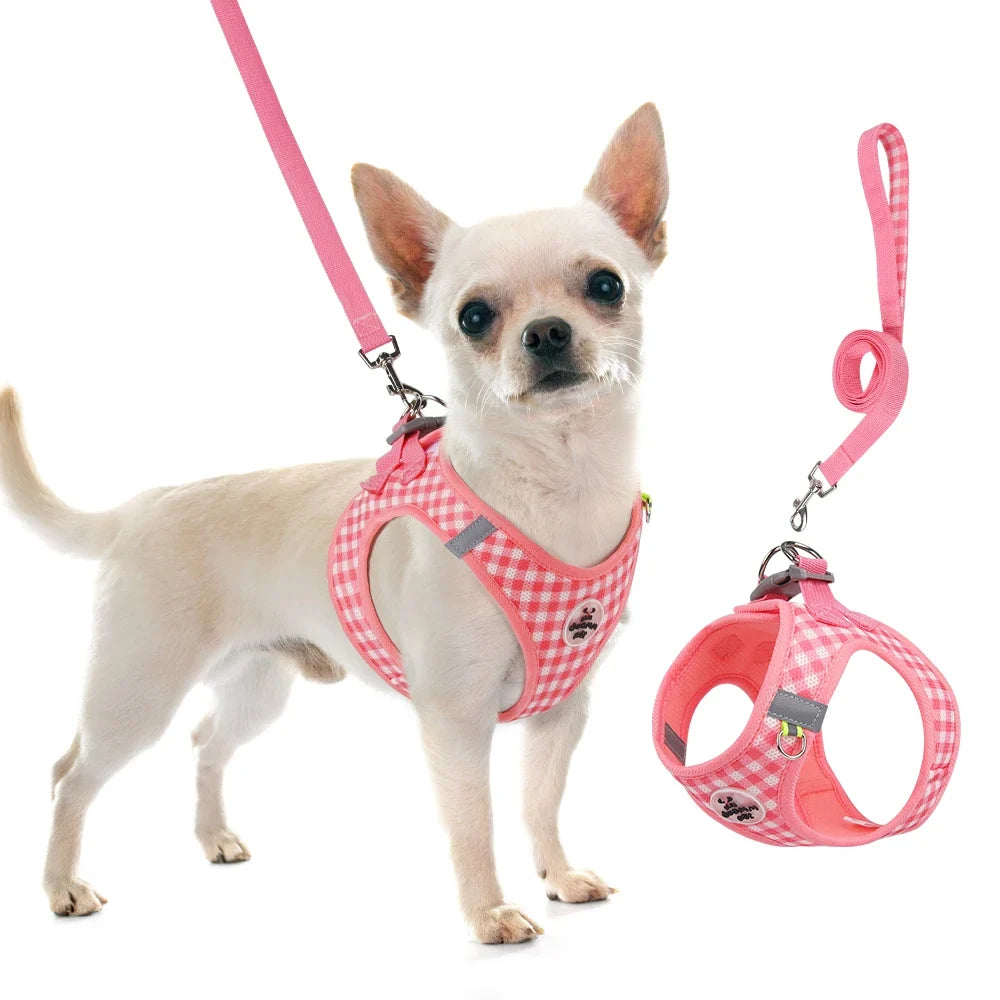
- Gingham Plaid Cat Harness & Leash Set: an adjustable vest designed to be hard to slip out of, with a reflective strip and matching leash.
- Cute Bear Harness – With or Without Leash: a breathable, adjustable vest that fits cats as well as small dogs.
- 3D Cartoon Vest Harness with Leash: a soft vest harness for cats and small dogs, leash included.
- Mini 2 m Retractable Leash for Cats & Small Dogs: a light leash sized for cats, to pair with a harness in quiet areas.
Not sure about sizing? Email us at support@petify-online.com. Every order comes with free international shipping with tracking and 14-day returns from delivery.
FAQ
Can my cat wear a collar and a harness at the same time?
Yes. During outings, a breakaway collar with ID can stay on under the harness. Clip the leash to the harness only, and make sure the harness doesn't press on the collar buckle.
Should indoor cats wear a collar?
It's optional. A breakaway collar with an ID tag helps if your cat ever slips outside. If your cat dislikes it or is microchipped and never goes near the door, going collar-free is a reasonable choice.
Can I use a dog harness on my cat?
Some harnesses are made for both cats and small dogs, and these can work well. Check the size chart carefully and choose a vest style with adjustable neck and chest straps, since cats slip out of loose harnesses easily.
How long does it take to harness train a cat?
It varies. Some cats are comfortable within a few days, others need several weeks. Short, positive sessions work better than long ones.
Is a retractable leash safe for cats?
It can be, with a harness and in quiet places. A short leash, such as a 2 m one, keeps your cat within reach. Lock it when anything startling appears, and never use it with a collar.
Buy 2 products, save 15% · 3 or more, save 25%
Shop the deals